Dr. Carlos Sada
Periodontist at Mardoki Dental Clinic and Implantologist at the Basque Center for Implantology and Orthodontics.
Maintenance of Peri-implant Tissues
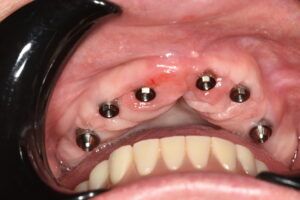
As described in the literature, the One-Abutment-One-Time technique involves placing a definitive abutment at the same time as implant insertion, avoiding subsequent disconnections that can compromise the biological seal. This clinical approach allows for better preservation of peri-implant tissues, reduced marginal bone loss, and more stable and predictable healing.
Clinical basis of the transepithelial abutment
The classic concept based on the 4.8 mm diameter Avinent trans-epithelial abutments has demonstrated reliable and stable long-term clinical results, as extensively described in the literature. It is on this established foundation that the new Avinent SLIM abutment has been developed, with an optimized design to meet current clinical needs, particularly regarding the treatment of peri-implant tissues.
Evolution of the New SLIM Design
This evolution of the profile and geometry allows for increased soft tissue space, promoting greater biological stability and improved bone retention. It also facilitates surgical and prosthetic protocols, making them more predictable, particularly in the placement of subcrestal implants. This is not intended to replace the classic concept, but rather to complement it according to the specific clinical indication.
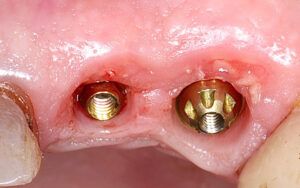
Figure 1. Reduction of soft tissue in the vestibular area and ischemia in the palatal area of the implant abutment 23 and 24. In this case, the emergence profile of the abutment exerts pressure on the mucosa and generates tension in the bone crest.
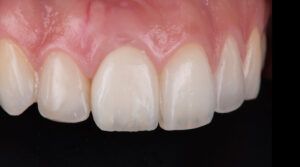
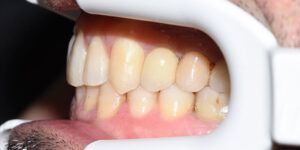
Figure 2. Replacing a classic transepithelial abutment with a Slim abutment allows for soft tissue accumulation in both the buccal and palatal areas, reducing pressure on the mucosa and relieving tension on the alveolar crest, thus promoting greater preservation of peri-implant tissues.
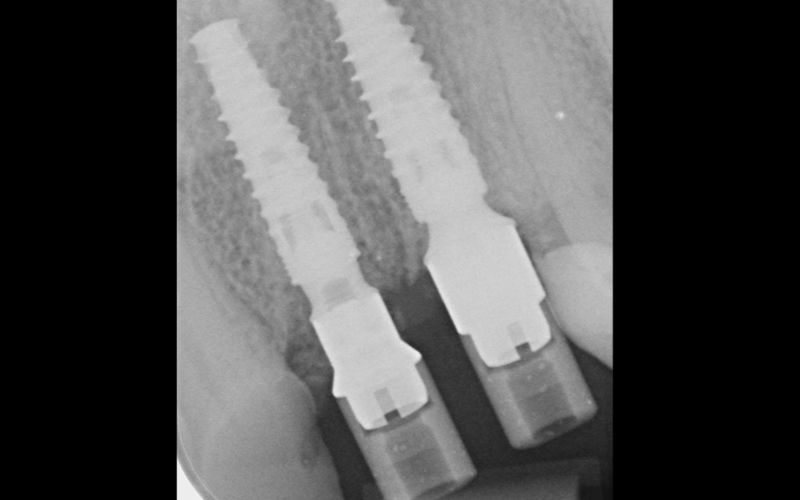
Figure 3. Postoperative radiograph of the implants with the trans-epithelial abutment, a Slim abutment in position 22, and a classic abutment in position 23, showing optimal peri-implant tissue preservation.